

Turn Your Show Into a Ritual
The difference between content people find, content people watch, and content that brings them together.


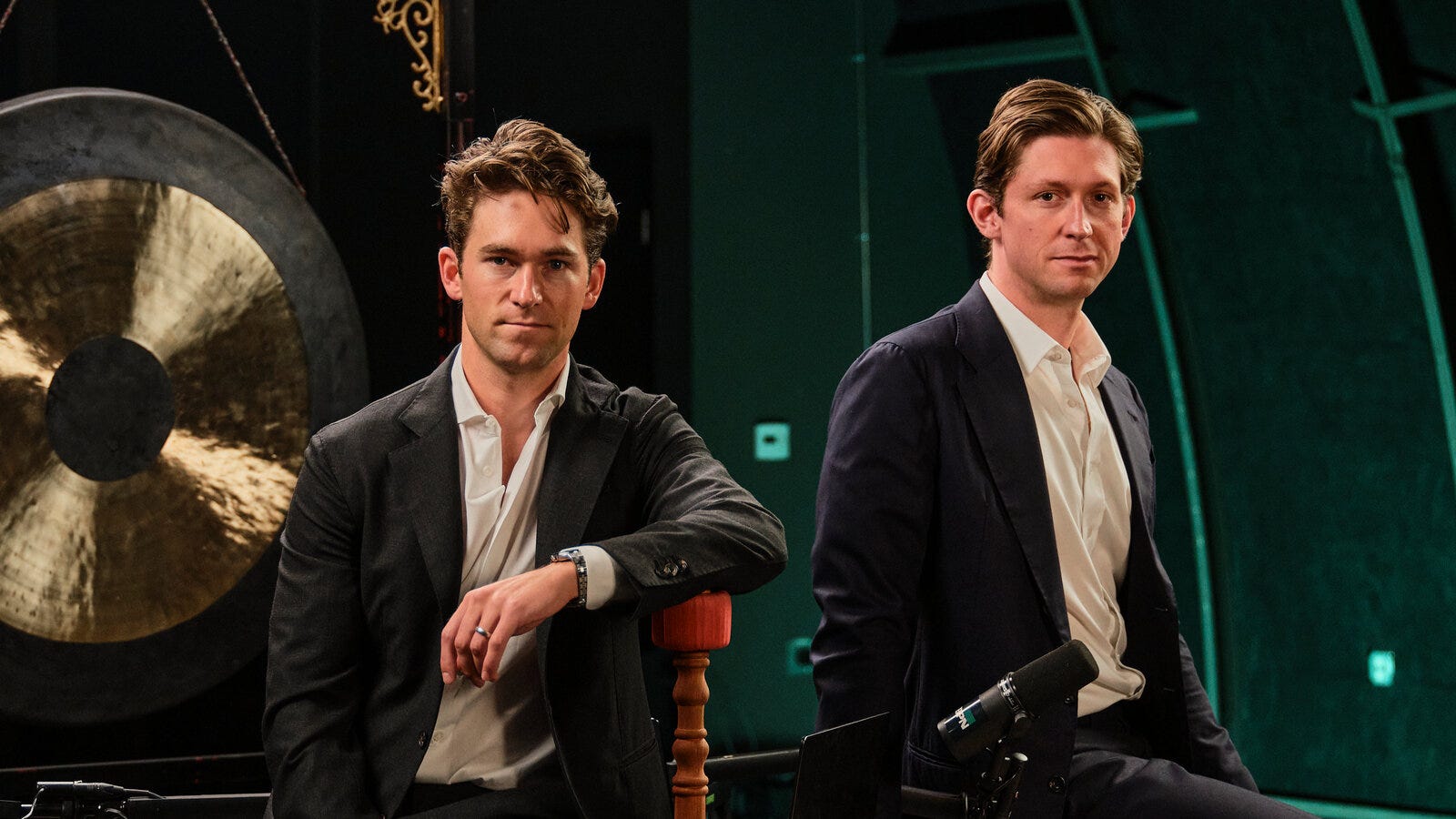
There are three ways people consume content right now. Discovery — the algorithm serves you something, you watch it, you may never see that creator again. Routine — you come back to the same person or show because it’s become part of your day. And ritual — you show up because other people are showing up too, and the experience of being there together is the point. Most shows are stuck in the first category. The most valuable ones figure out how to get to the third.
Almost the entire creator economy has been built for discovery. Short form is optimized for it — shoot, edit, publish the best version, let TikTok or Reels find the audience. Even the most dedicated followers of a show frequently miss whole sets of episodes. There’s no cost to absence because the content isn’t asking anything of you. You watch alone. You scroll past. Maybe you send it to a group chat, but you’re passing along something that already happened.
The interesting shift happening right now is from discovery to routine. The biggest creators on the internet — IShowSpeed, Kai Cenat — aren’t making videos anymore. They’re running practically nonstop livestreams.


You don’t watch a specific piece of content. You tune in. TBPN, a daily three-hour live tech show, has built the same thing for the startup world — a show that looks like CNBC but runs like a creator business, with 10 employees and $5M in revenue last year. These are routine machines. The flywheel is simple: live generates clips, clips generate reach, reach generates live viewership. You become part of someone’s day.
But routine isn’t the real prize. Ritual is.
I know this because I grew up watching sport. Growing up in London, Sky Sports News was perennially on the family TV. On matchdays, my dad and I would set up in the living room to spend all day taking in the live games, commentary, and clips. Every match had a broadcast truck, a replay booth, a highlights package, a distribution plan, and a crew that knew how to turn three hours of real time into a week of content.
It worked because watching brought you closer to your fellow fans, near and far. I used to wonder if Manchester United still would have scored in the 93rd minute if I hadn’t been watching. Our attention felt wrapped up in the outcome. We wouldn’t simply watch games as part of our day — we would look forward to games as the highlight of our day, just as we looked forward to gathering around the dinner table. When the final whistle blew, we would check our fantasy teams and banter about who was winning our own league. I didn’t realize it at the time, but the real reason I was watching is the same reason I still watch today — my dad is watching the same match on the other side of the earth, and we both know it. That’s what ritual does.
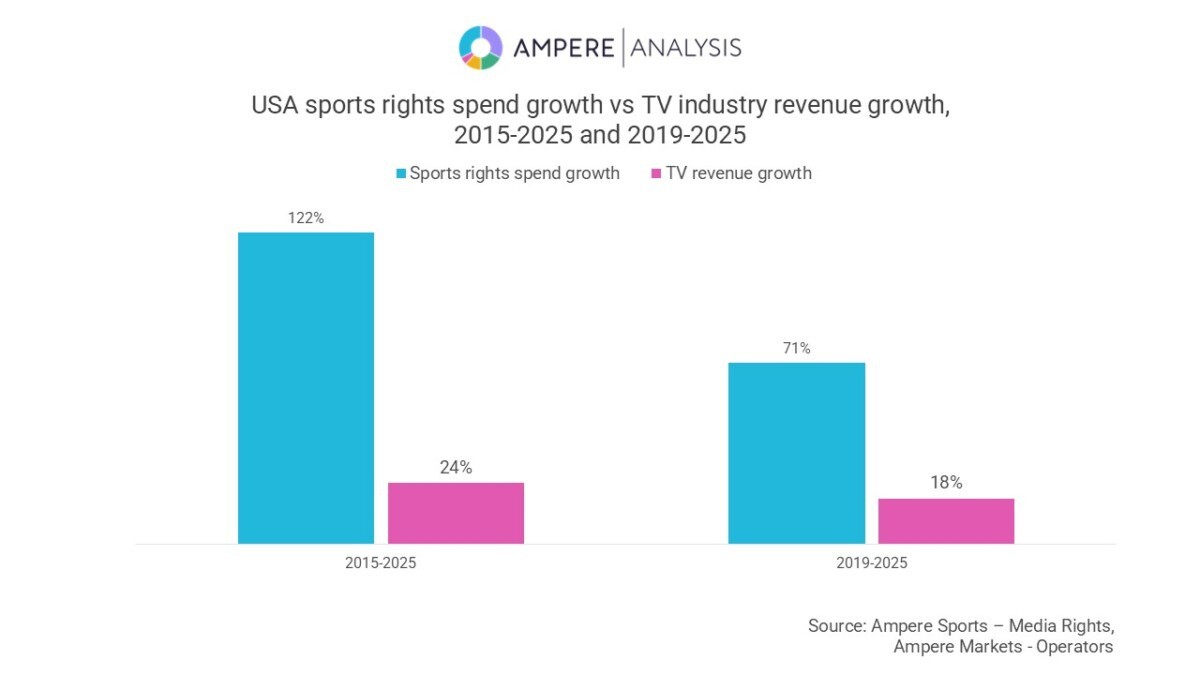
It’s no surprise that live sport is doing better than ever. Sports rights now account for 14% of all US television revenue, up from 8% in 2015. The broadcasters and streaming platforms are spending a larger and larger slice of their dwindling revenues just to keep live content on their platforms. The Super Bowl isn’t the most-watched broadcast in America because it’s the best football game. It’s the most-watched because 120 million people are watching the same thing at the same time, and they all know it. The togetherness is the product.
So what separates sport from a daily livestream? Not just participation — shared participation. The crowd at a match is in it together, and the best live creators are starting to figure this out. TBPN works because the audience shapes the show. Someone flags breaking news in the chat and it’s discussed on air minutes later. Someone the hosts are talking about pops up and gets pulled into the broadcast live. Everyone in the chat felt like they were in the room together when it happened.
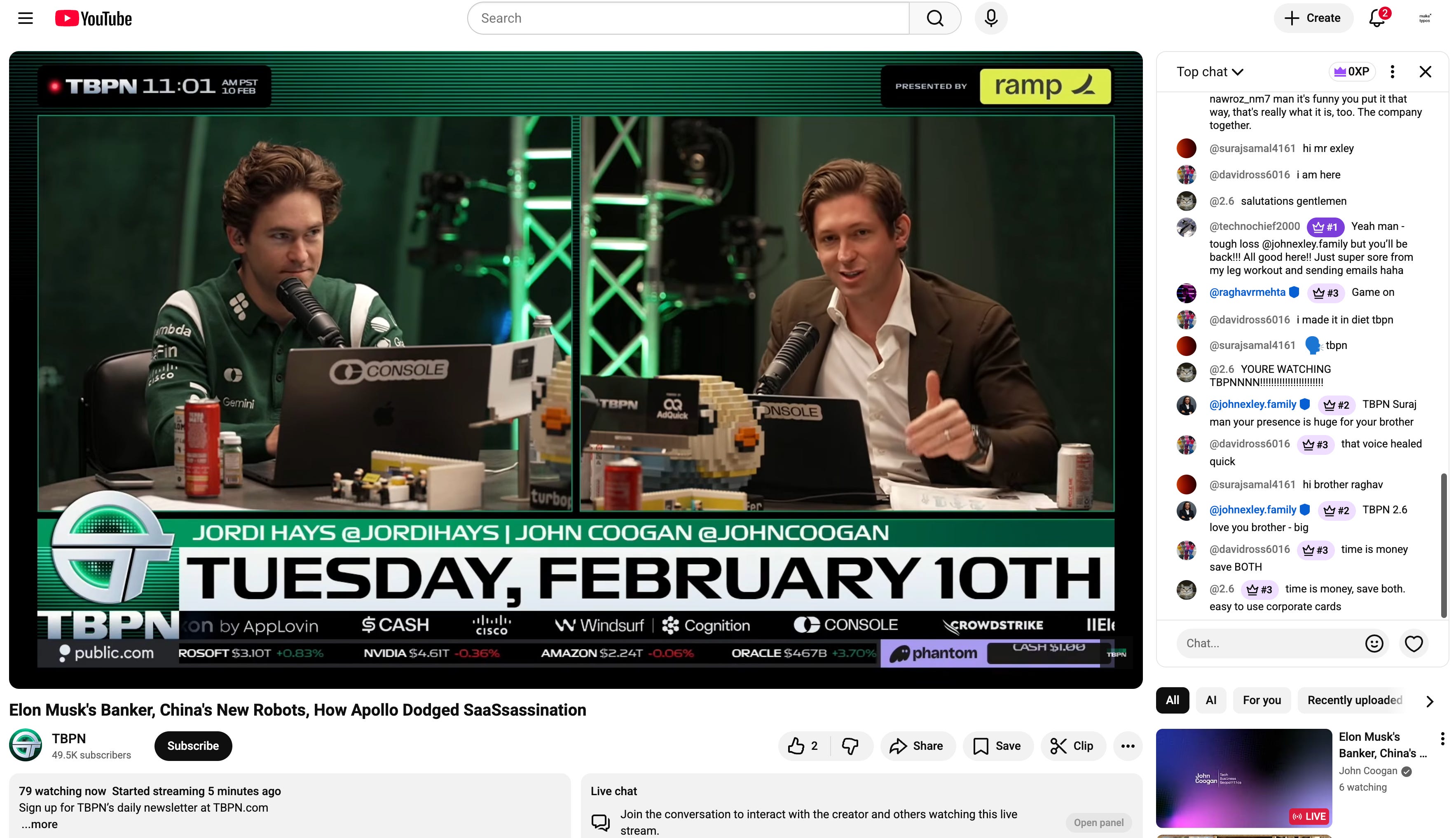
When I turn TBPN on, I feel like I’m tuning into tech. I suddenly feel part of a world, even if I’m not talking to the people from that world. That’s why it’s approaching ritual status in the tech industry — it generates an entire ecosystem around it. For sport, it’s pundit shows, fan reactions, fantasy leagues — for TBPN, it’s the reactions on X, quote tweets, and office gossip. The insider tech world is smaller than sport fans, but a ritual for only a few people is still powerful: the TBPN team are expecting to triple their ad revenue this year.
And this is where it gets interesting for anyone making shows right now. Because discovery, routine, and ritual aren’t just different parts of life. They’re different businesses.
Discovery is a volume game. You’re selling moments — the perfect cut, the perfect hook, the thing that stops a thumb. The algorithm is your distributor and it guarantees you nothing. Your audience doesn’t know your name; they know your format.
Routine is a loyalty game. You’re selling presence — the comfort of knowing someone is on, every day, and that you can drop in whenever you want. This is what Speed and Kai have built. The clips are the marketing. The stream is the product.
Ritual is a belonging game. You’re selling togetherness — the feeling that you are experiencing this with other people, that something is happening right now and you’re all in it.
What showrunners need to realize is that ritual compounds and discovery doesn’t. TBPN can clip its stream into a thousand TikToks — each one plays the volume game for free. Meanwhile, a short-form studio that goes viral starts from zero the next morning. The question for any showrunner right now isn’t what platform or what format: it’s whether they’re building a media property that compounds.
Celebrity Substitute featured A$AP Rocky. He taught Harlem P.S. 125’s kids how to rap, then collaborated on a remix of “Punk Rocky” with them.
Are You Okay? launched a podcast hosted by Brianna Morales. The first episode is out now.
IG introduced clickable graphics on Reels. You can now link out to other videos or profiles if you cut your videos via Instagram’s Edits feature.
Ramp is expanding its campaign with The Office star Brian Baumgartner. The latest video introduces ‘The Brians™’ — multiple Kevins loose in an office — ahead of their Super Bowl spot. The financial company has been running the series since announcing Baumgartner as spokesperson last year.
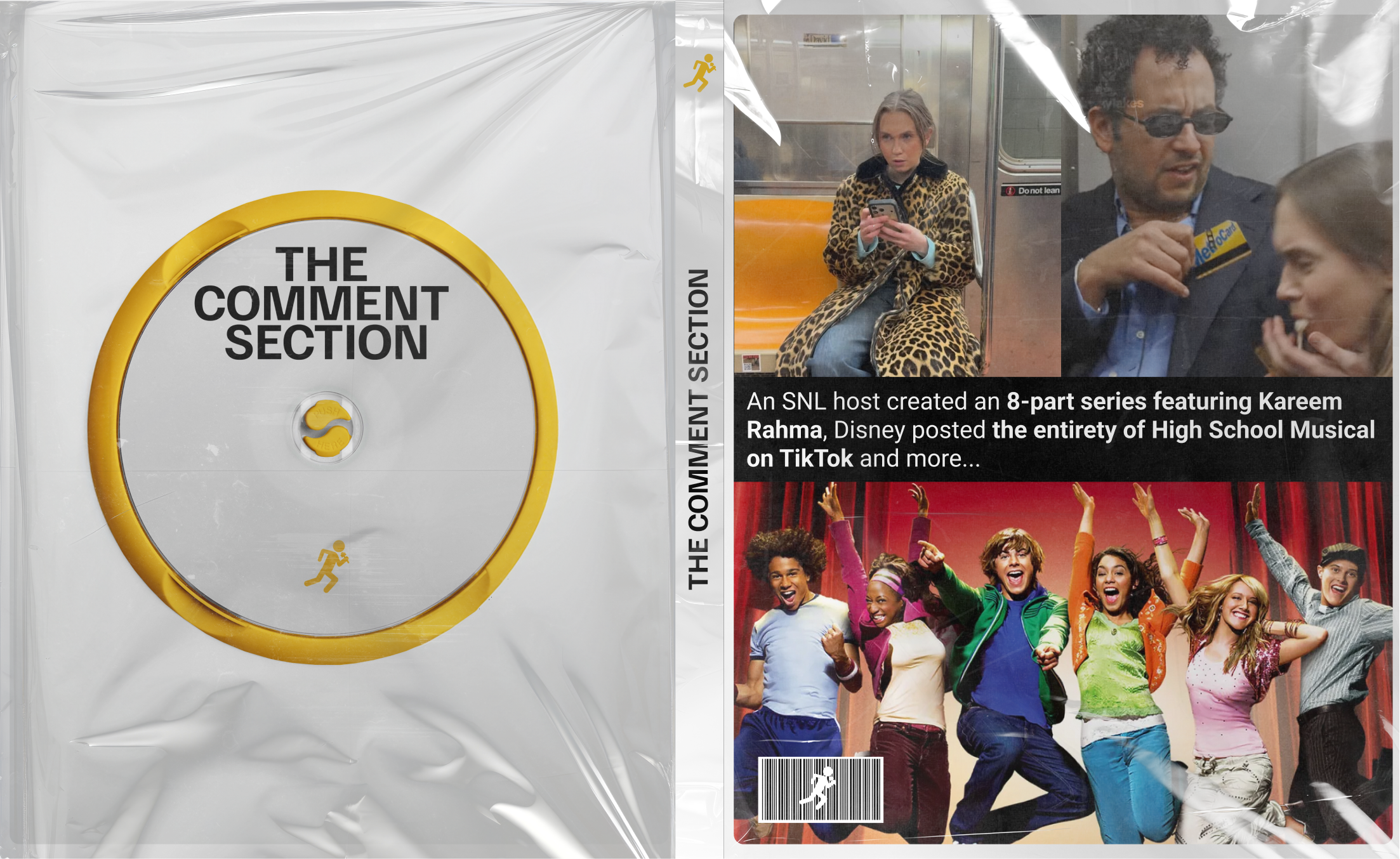
SNL Host Veronika Slowikowska created a 8-episode series on Instagram where her wish to appear on Subway Takes becomes a (sur)reality. Here is the series: 1, 2, 3, 4, 5, 6, 7, 8.
Disney posted the entirety of High School Musical on TikTok in 52 15-second videos. Could traditional studios finally be adapting to a new format?
Mad Realities is launching a new show called Good Dog. They collaborate with local shelters to take dogs out on life-changing walks. First episode out next week.
Ask A Fuckboy is hosting their biggest show yet on February 14th in Brooklyn. Get your tickets!
As we mentioned in our first issue, we work on an app for showrunners called Typo*. If you’re tired of duct-taping together iMessage, Slack, Frame, Dropbox and Asana to run your show, we’d love for you to be a design partner. Reach out to Sahil at sahil@typo.inc.
*design partner (n.) — a person or team who gets early access to a product and gives their unfiltered thoughts on it.
* typo (n.) — a messenger that runs your show for you. It knows what’s due, who’s late, where the files are, and what the notes were.